You wake up, reach for your phone, and before your feet hit the floor, you’ve checked three apps, scanned a feed, and absorbed the ambient anxiety of a global economy in flux. By the time you’ve brushed your teeth, your perception of what is possible—and what is likely—has been recalibrated by invisible hands. You aren’t just feeling overwhelmed; you are experiencing a managed decline of your own agency.
We often talk about the lack of control as a personal failure of discipline or focus. We blame our burnout on poor time management or a lack of resilience. But that misses the point. The feeling that your outcomes are untethered from your effort isn't an accident of the modern world. It is the core business model of it.
The Metaphor: The Rigged Carnival
Think of your digital life as a carnival game where the dartboard moves the second you throw. You think you’re aiming for the bullseye, and you’ve been told that if you hit it, you win the prize. But the game designer knows that if you hit the bullseye too often, you’ll walk away bored. So, they tweak the board to ensure you get *just* close enough to feel like the next throw will be the one. You aren’t playing a game of skill; you’re playing a game of retention.
Choice vs. Design Pressure
We need to stop conflating choice with design pressure. A choice is when you decide to pursue a career, buy a home, Website link or learn a skill based on a clear feedback loop. Design pressure is when an interface presents you with a list of "opportunities"—like job alerts or investment tips—that are optimized to keep you refreshing the page rather than finding a resolution.
When you navigate a job portal or a banking app, you are interacting with mobile-friendly interfaces designed for high-frequency interaction. These interfaces are built to reduce the friction of *doing* (scrolling, clicking, applying) while simultaneously increasing the friction of *arriving* (getting hired, getting approved, seeing results). You feel the lack of control because the system is designed to keep you in the middle of the funnel, indefinitely.
The Architecture of Economic Instability
The economic instability stress we feel today isn't just about inflation or the cost of living; it’s about the erosion of cause-and-effect. In a stable environment, you put in X effort, you receive Y result. Today, the variables are too opaque. You can optimize your resume, network, and upskill, yet remain ghosted by an automated applicant tracking system that isn't even looking at your human merits.

This is the crux of modern job market uncertainty. We are being asked to compete in a game where the rules are hidden, dynamic, and potentially arbitrary. When outcomes feel detached from merit, humans stop trying to change the outcome and start trying to manage their own distress. This is where we see the rise of passive, high-frequency engagement.
Comparing Perceived vs. Actual Agency
Action Perceived Control Actual Structural Agency Applying for a job online High (if I work hard enough) Low (filtered by algorithmic black boxes) Checking market/financial feeds Medium (staying informed) Low (reactionary to volatile macro-trends) Participating in digital communities High (I am heard) Low (subject to platform algorithm changes)Structured Uncertainty vs. Chaos
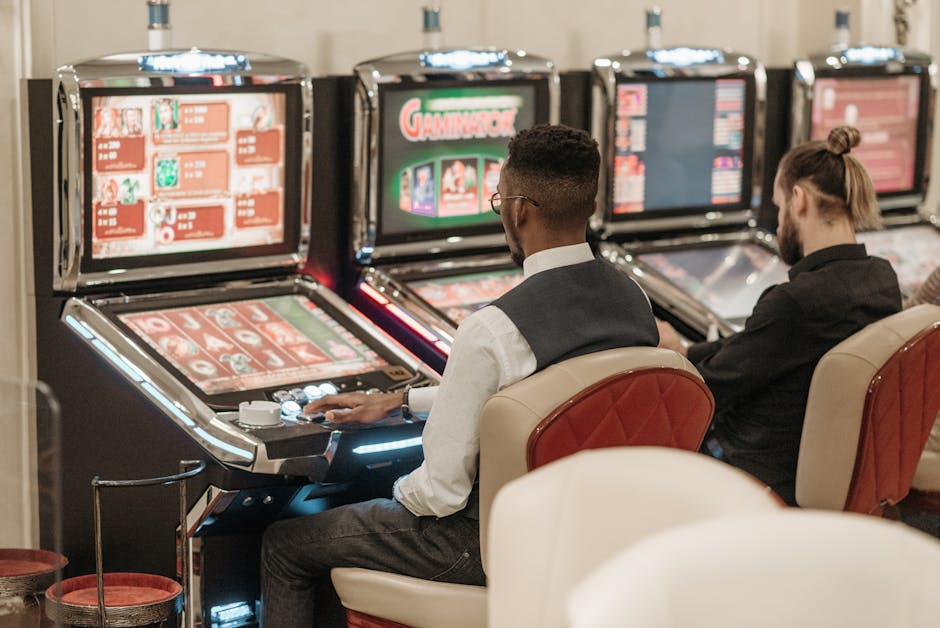
Here is the paradox: while we crave control, we have grown accustomed to—and perhaps addicted to—structured uncertainty. Why else would we flock to things like live dealer-led experiences? Whether in gaming or high-end remote service platforms, we are drawn to these interactions because they provide a human tether in a sea of cold algorithms.
The "dealer" or the human facilitator provides a sense of fairness. Even if the odds are against you, you can see the cards being dealt. You can see the human error. You can see the reality of the process. Contrast this with the opaque, "black box" nature of job applications or algorithmic social feeds. In those spaces, you can’t see the dealer, and you suspect the deck is stacked against you because the platform needs you to keep playing, not to win.
The Crisis of Fairness
Fairness requires rules. We feel out of control lately because the rules of the game are constantly changing. If you apply for a job, you expect the resume to be the primary document of merit. When the "rule" shifts to a keyword-parsing algorithm that ignores your portfolio, the sense of fairness evaporates. Without fairness, agency feels futile.
We are currently living in a landscape of "algorithmic management," where every facet of our digital existence is governed by feedback loops that prioritize platform metrics over user satisfaction. The feeling of drift comes from trying to navigate a world that is moving at the speed of an algorithm while we are still trying to live at the speed of a human life.
Reclaiming Agency Through Participation
You cannot "win" against a system that is designed to keep you in a state of perpetual application. However, you can reclaim your agency by changing *where* you participate.
- Seek direct feedback loops: Look for opportunities where your effort leads to a human interaction, not just a digital handshake. De-prioritize automated interfaces: If an application requires a mobile-friendly portal that feels like a dead end, spend less time there. Use those hours to cultivate "analog" networks. Recognize the "Design Pressure": Whenever you feel the urge to refresh a feed or check an update, ask yourself: "Am I doing this to solve a problem, or is the design encouraging me to stay trapped in this loop?"
The lack of control is a product of our environment, not a defect in our character. When outcomes feel beyond your reach, it’s usually because the system has been engineered to make them inaccessible by design. Acknowledge the rigging of the carnival, step away from the table, and start placing your bets in spaces where you can actually see the dealer.
Real control isn't about being able to manipulate the entire system; it's about knowing when the game is rigged and choosing to spend your energy elsewhere. The most radical thing you can do today is to stop playing by the rules of a game that wasn't designed for you to succeed.